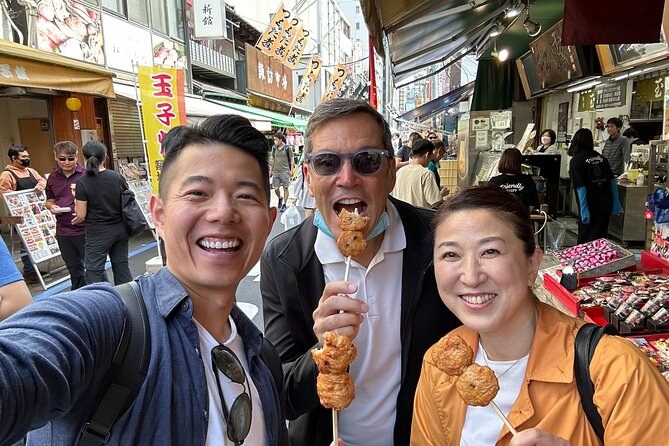
The market is a morning, not a day. The lanes are yours from 9am and most shops are closing by 2pm. Start with what to eat at the Tsukiji Fish Market, because everything below is better on a full stomach. If you want the first hour led, a Tokyo Tsukiji Fish Market tour puts a guide beside you in the lanes and leaves the rest of your day free.
The nine, side by side
The places run in order of effort, from the market's own corner to the ones you reach by train.
Nine things to do near the Tsukiji Fish Market, with each place's own hours, price and station
| Place | Nearest station, by its own account | Price | Open |
|---|---|---|---|
| Tsukiji Hongan-ji | Tsukiji, joined to exit 1 | Free | Main hall 6am to 4pm |
| Namiyoke Inari Shrine | Tsukijishijō, 5 minutes; Tsukiji, 7 minutes | No charge published | Shrine grounds |
| The roof of Tsukiji Uogashi | Inside the market | Free to enter | 5am to 3pm; the public from 9am |
| Kachidoki Bridge Museum | Tsukiji 6-chome, by the old market gate | Free | Tue, Thu, Fri and Sat, 9:30am to 4:30pm |
| Hama-rikyu Gardens | Tsukijishijō, 7 minutes | 300 yen; 150 yen at 65 and over | 9am to 5pm, last entry 4:30pm |
| Kabuki-za | Higashi-ginza, exit 3 | Single-act seats, priced per act | Gallery 10:30am to 6pm |
| Ginza's car-free Chūō-dōri | Ginza 1-chome to 8-chome | Free | Weekends and holidays, noon to 5pm or 6pm |
| Toyosu Market | Shijō-mae, Yurikamome line | Free walkway | 5am to 5pm; shut Sundays and holidays |
| Asakusa and Meiji-jingū | By guided morning from Harajuku | From $71 per person | 4 hours |
What is there to do at the market's own corner?
Three stops need no transport at all.
1. Tsukiji Hongan-ji
Entry is free and the main hall is open from 6am to 4pm, with a service at 7am and another at 4pm. Itō Chūta modelled the hall on the old Buddhist architecture of India and other Asian countries. Look for the stained glass above the door and the German pipe organ, which you can hear from 12:10pm on the last Friday of the month. Café Tsumugi, in the information centre, serves an 18-dish breakfast from 8am to 10:30am.
2. Namiyoke Inari Shrine
The shrine dates from 1659, when the land being reclaimed at Tsukiji kept washing away until its deity was enshrined. Its grounds carry memorial mounds raised to sushi, prawns, monkfish, live fish, eggs and kelp. Look up for the great lion head, recarved in 1990: it stands 2.4 metres high and weighs a tonne. Come in June and you may catch the Tsukiji Shishi Matsuri, its grand festival.
3. The roof of Tsukiji Uogashi
Chuo Ward set this market up to keep Tsukiji's trade going after the wholesalers left. About 60 shops trade from 5am to 3pm, and you are asked to come after 9am, once the professional buyers have finished. You cannot eat on the ground floor, so carry what you bought up to the rooftop plaza or to the third floor of the Odawarabashi building.
Some market walks add the temple to the lanes. The two-hour walk that includes the temple is capped at ten and meets at the Starbucks by Tsukiji Station.
What can you walk to from Tsukiji?
Four more are within a walk of the lanes, and each keeps its own days.
4. Kachidoki Bridge and its free museum
Kachidoki Bridge is a bascule bridge over the Sumida, finished on 14 June 1940 and last raised on 29 November 1970. The substation that powered it is now a museum, beside the old market's Kachidoki gate. You pay nothing to go in, but it opens only on Tuesdays, Thursdays, Fridays and Saturdays, from 9:30am to 4:30pm.
5. Hama-rikyu Gardens
You pay 300 yen, or 150 yen at 65 and over. The garden opens from 9am to 5pm, with last entry at 4:30pm, every day except 29 December to 1 January. Its tidal pond draws water from the bay and is the only seawater pond left in Tokyo. The Nakajima teahouse, first built in 1704, serves matcha. On a Saturday or Sunday you can join a free English tour at 11am.
6. Kabuki-za
The theatre stands over exit 3 of Higashi-ginza Station, which the market lists three minutes from its lanes. You do not need a whole afternoon: Kabuki-za sells single-act seats on its fourth level, online in advance and at its box office on the day. For the October 2026 programme they cost 1,500 to 4,000 yen an act. The Kabukiza Gallery, on the fifth floor of Kabukiza Tower, opens from 10:30am to 6pm, and the roof garden is entered from the same floor.
7. Ginza's car-free main street
Chūō-dōri, Ginza's main street, closes to vehicles on Saturdays, Sundays and national holidays. The closure starts at noon and runs to 5pm from October to March, and to 6pm from April to September. For the route, follow the walk in from Ginza in reverse.
What needs a train, a bus or a guide?
8. Toyosu Market
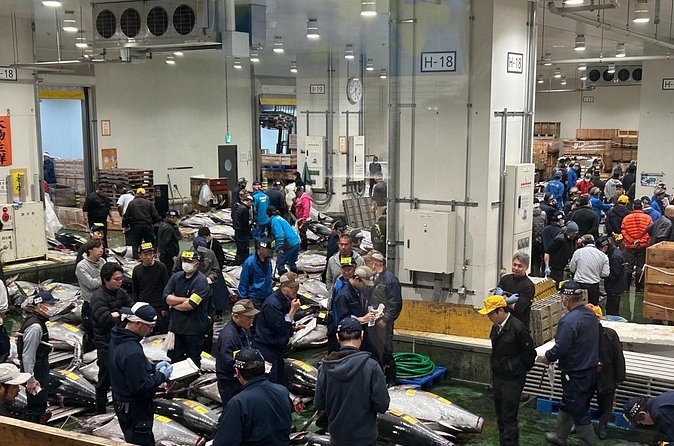
The wholesale trade that left Tsukiji reopened here on 11 October 2018, so the tuna auction is not at Tsukiji any more. Toyosu Market opens from 5am to 5pm, shuts on Sundays, public holidays and its own closed days, and lets you watch from a visitors' walkway. There is no public parking, so take the train to Shijō-mae, on the Yurikamome line, or the Toei bus 市01 from Shimbashi. Where the auction went covers the lottery and the route. For a guide, the private morning that does both markets starts at Shijō-mae Station and leaves breakfast and the bus fare back to Tsukiji to you.
9. Asakusa and Meiji-jingū
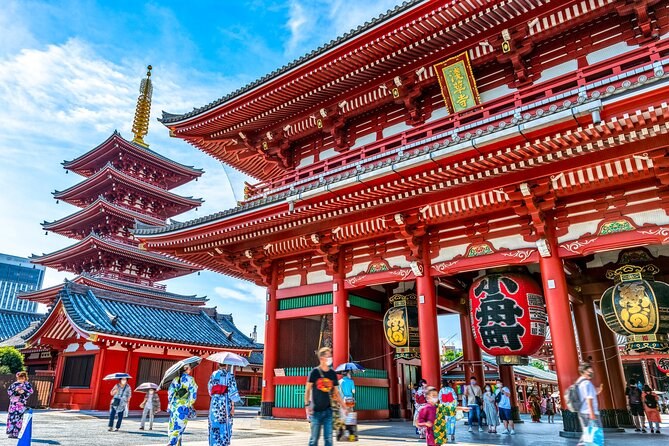
Neither is near Tsukiji, and both make sense only as part of a wider morning. The four-hour small-group morning starts outside UNIQLO in Harajuku, is capped at eight and covers Meiji-jingū, Sensō-ji and the fish market with your entries included. Budget about 550 yen of train fare on top. The private day adds pickup from your hotel, so hold it against the other Tsukiji Fish Market private tours before you choose.
In what order should you do them?
The published hours settle most of it for you.
- Before 9am: the temple. It opens at 6am, and buyers have priority in the lanes until 9am anyway.
- From 9am to late morning: the market. Eat while every counter is open.
- On your way out: the shrine and the Uogashi roof. Neither needs a train.
- Then pick one direction. The bridge museum and Hama-rikyu, or Kabuki-za and Ginza in time for noon.
The map of exits and meeting points shows where each station brings you up, and a Tsukiji morning, hour by hour covers the lanes themselves.
Questions about what is near the Tsukiji Fish Market
How far is Ginza from the Tsukiji Fish Market?
Can you walk from Tsukiji to the Hama-rikyu Gardens?
Is Tsukiji Hongan-ji free to visit?
Can you see Toyosu Market and Tsukiji on the same morning?
What is open near Tsukiji on a Sunday?
Still choosing the market walk itself? Tsukiji Fish Market Tours sets each one beside its price, its group cap and whether the fare buys your food.