Nine hours of trading is not nine hours of the same market. Between five and nine these lanes are a workplace with carts moving through them. Between nine and eleven they are the best food street in Tokyo. By one they are packing up around you.
Nobody publishes that shape, so most visitors arrive at whatever hour their hotel breakfast ends and get whichever market that is. Here is what each hour is actually for.
What the market's own hours mean
Two figures matter and they are not the same figure. Trading starts around 5am. The market itself asks that professional buyers have priority until 9am, and it publishes that as the first of its eight conduct rules. Most shops start closing from 2pm.
So the visitor window the market points at is 9am to 1pm, and the two hours from nine are the best of it. Everything below is built on that.
5am to 7am: what you can and cannot do
You can walk in. There is no gate, no ticket and nobody to ask. What you should not do is take up a lane: deliveries are arriving, restaurant buyers are working, and a group standing across a row is a genuine obstruction rather than a mild one.
Some counters will serve you and most are still setting up. Come at this hour only if watching a market work is the point. If it is, stand at the edges and keep moving.
7 to 9am: the professionals' window
The busiest trading of the day, and the least useful two hours for a visitor. The grills are not all lit, the sit-down counters are filling with people who work here, and the shops are dealing with buyers who order by the box.
There is one good reason to be here: Tsukiji Hongan-ji opens at six and is completely empty. Ten minutes inside an Indian-styled Buddhist hall before the market gets going is a genuinely good start to a Tokyo day, and it costs nothing.
9am to 10am: arrive now
This is the hour. Every shop is open, the trade has finished, the grills are lit and the queues have not built. You can stand in front of a counter and look at it without being in anybody's way.
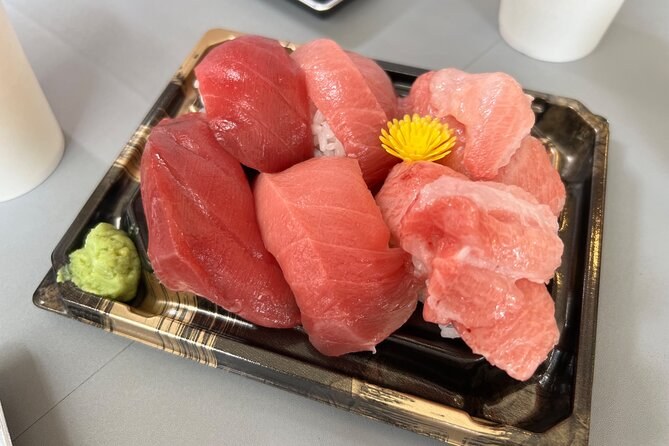
Spend it on the things that are best hot and best fresh: tamagoyaki straight off the pan, a grilled scallop, a skewer of chutoro. Walk the main covered lane end to end first, so you know what is there, then double back for what you want.
10 to 11am: the side rows
The main lane is filling now, and the interesting hour begins. Turn off it. The narrower rows carry the specialists: dried goods, katsuobushi shaved to order, tea blended in-house, pickles by the scoop, kitchenware and the knife makers.
This is also the hour for Tsukiji Uogashi, the building that kept about 60 of the old market's wholesalers when the rest left. Its ground floor opens to the public from nine and its third floor has a food court and a roof terrace — the only real seating in the market that is not a restaurant.
11am to noon: sit down
Peak. The main lane is shoulder to shoulder on a Saturday and the well-known counters are twenty deep. Stop competing with it and get a table.
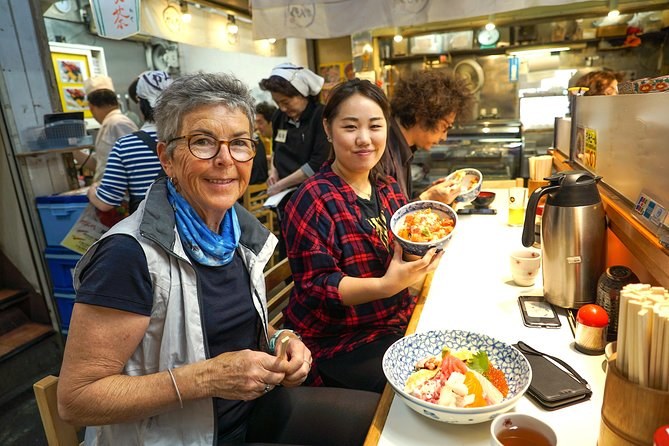
The small restaurants between the stalls do seafood rice bowls for 2,000 to 4,000 yen, and eleven is early enough to walk into most of them. An hour later it is not. The food post has what to order when you get there.
Noon to 1pm: the shrine and the last stalls
Namiyoke Inari Shrine takes four minutes and is the strangest thing in Tsukiji: a wave-warding shrine on reclaimed ground carrying memorial mounds raised by the trades to sushi, prawns, eggs and kelp.
Then buy what you are taking home. Knives, tea, dried scallop, katsuobushi. The fish counters are thinning but the dry goods are not, and this is the hour to do it without carrying a bag round the market all morning.
1pm to 2pm: what is left
Plenty, but less of it. Restaurants keep serving into the afternoon and several are at their quietest now. The stalls are the loss: tamagoyaki sells out, the grill counters shut down, and unsold raw fish is packed away rather than discounted.
A late visit is a good lunch and a poor market. Take that trade knowingly rather than by accident.
How the guided walks fit the hours
Which walk covers which part of the morning
| Walk | Length | Food | Where it sits in the morning |
|---|---|---|---|
| Street-food walk, 90 minutes | 1h30 | You buy it | The tightest option. Fits before a midday train |
| Two-hour walk, buy your own | 2h | You buy it | Thirty minutes at the temple first, then the lanes |
| Six-tastings walk | 2h30 | Included | Covers the market, Uogashi and Namiyoke Inari |
| Ten-tastings walk | 2h30 | Included | Includes a seated brunch, so it absorbs the 11am problem |
| Five-tastings walk | 3h | Included | The full shape of this guide, with the ordering handled |
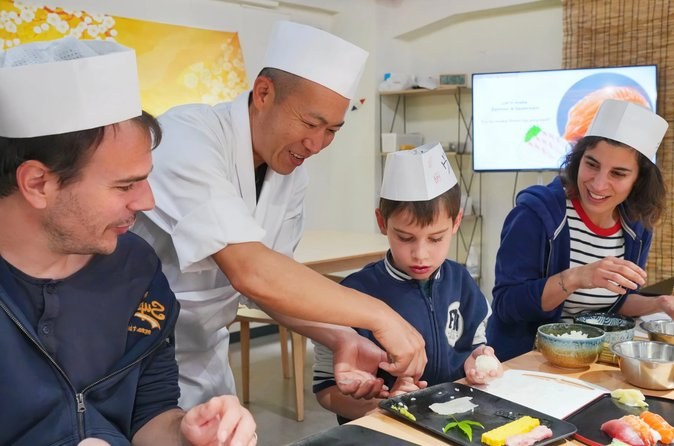
| Market walk plus sushi class | 4h | Included | Market first, class after. Takes the whole morning |
| Toyosu auction, then Tsukiji | 3h | You buy it | Starts before dawn at a different market entirely |
What to do if you only have an hour
Come at nine. Walk the main covered lane end to end without stopping, which takes about eight minutes. Then walk it back, stopping three times: tamagoyaki, something grilled, and one tuna counter. Finish at Tsukiji Hongan-ji on the way to the station.
That is a real visit and it beats ninety confused minutes at midday.
And if you have a whole morning
Nine to noon in the market, then Ginza. Higashi-ginza is three minutes' walk and the department stores open at ten or eleven, so the timing works without planning. The Hamarikyu gardens are about ten minutes south if you would rather sit down outdoors. The map page puts all of it on the ground.
How does the market's morning differ from Toyosu's?
Completely, and knowing that saves you a wasted alarm. Toyosu is the wholesale market the trade moved to in 2018, and its morning peaks around half past five with the tuna auction. By seven the bidding is over. Tsukiji's morning has no auction in it at all and does not really begin, for a visitor, until nine.
So the two markets do not compete for the same hours — they run consecutively. If you want both, the only order that works is Toyosu first and Tsukiji after, which is exactly how the one departure that covers both is built. The auction page has the detail, including the walkway that needs no lottery.
What if you can only come in the afternoon?
Come anyway, and adjust what you expect. From one o'clock the stalls are closing but the sit-down restaurants are still serving, and several of them are at their quietest then. You will eat well and you will not see much of a market.
The one thing worth doing in that case is Tsukiji Uogashi, which trades until three and keeps its food court open. Its roof terrace is a good place to be at two in the afternoon in a way the empty lanes are not.
Where the guides start you, and why it varies
Eight different meeting points inside about four hundred metres, which sounds like chaos and is really just the shape of the market. Six of the walks meet at the main gate of Tsukiji Hongan-ji, which is the natural western entrance. The rest use a Starbucks, a Veloce coffee shop, a Lawson convenience store, the Plat Tsukiji information centre or a restaurant annexe, all within a few blocks.
One warning is worth carrying with you: one operator says in its own listing that map applications route people to the back of the temple rather than the front. The front gate faces the market. If you are standing somewhere quiet with no guide and no crowd, walk around the building rather than waiting.
Whichever you are meeting at, get there ten minutes early. Every operator here starts at the stated hour and will not wait, and two of them state that fifteen minutes late is a no-show. The map page puts all eight against the station exits.
What to carry for the morning
Cash, in small notes: 3,000 to 5,000 yen a person if you are buying your own food, and plenty of counters still take nothing else. Shoes with grip, because the floors are wet in every month of the year. Hands free, because you will be holding food.
Leave the suitcase. The market asks visitors not to bring large bags and the lanes make the case better than the rule does; coin lockers at any of the three stations solve it, and Plat Tsukiji will take a stroller for 500 yen.
The day, before the hour
None of this matters if the market is shut. It closes on Sundays, public holidays and the Wednesdays the wholesale market's own calendar closes, and the Wednesdays follow the wholesale market's own calendar rather than a rule. The calendar page works through it, and the market publishes the calendar itself.
Frequently asked questions
What time should I arrive at Tsukiji?
Is it worth going before dawn?
How long do I need at the Tsukiji Fish Market?
Can I do Tsukiji and something else in one morning?
Are the shops really shut by two?
Tsukiji Fish Market Tours lists every walk with the hour it starts and the time it takes. A Tsukiji Fish Market food tour is built around exactly the shape this guide describes.