Almost everything that goes wrong at Tsukiji goes wrong before anybody arrives. People come on a Sunday. People come at half past one. People come expecting an auction that has not been held here since 2018. None of those is a small mistake, and all three are avoidable in about four minutes of reading.
Is the Tsukiji Fish Market still there?
Yes, and it is busier than the internet suggests. What left on 6 October 2018 was the Tokyo Central Wholesale Market — the licensed traders, the forklifts and the auctions — which reopened at Toyosu on 11 October 2018.
What stayed is the outer market: around 460 shops, counters and small restaurants in the lanes between Tsukiji Hongan-ji and the river. It is the part that was always open to the public, and it is the part everybody actually means. The market says so on its own website, and one operator repeats it inside its own listing.
Do you need a ticket?
No. The Tsukiji Outer Market is a public street. There is no gate, no booth, no admission fee and no queue to skip, and any page implying otherwise is selling you something that does not exist.
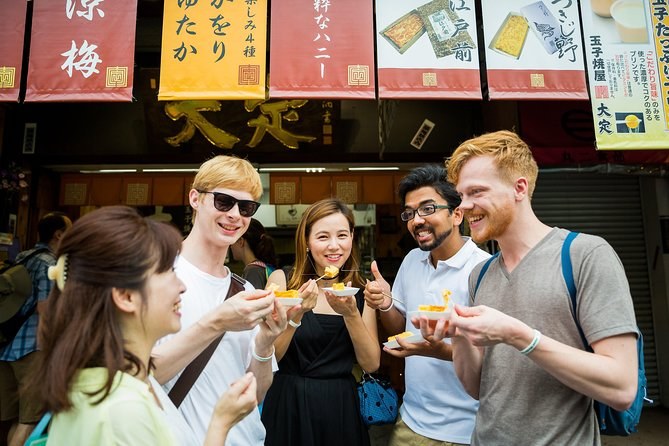
What you can buy is a guided walk, and that is a different proposition: Tsukiji Fish Market ticket prices start at $13 for ninety minutes with somebody who can read the market, and run to about $157 for a private guide who meets you at Toyosu before dawn. Visitor information sets out what a morning costs without one.
Which day, and which hour
Two decisions, and the first one is the one that ruins trips.
The hour matters almost as much. Trading starts around 5am, the market asks that professional buyers have the lanes to themselves until 9am, and most shops start closing at 2pm.
A trading morning, hour by hour
| When | What it is like | Verdict |
|---|---|---|
| 5am–9am | Deliveries and restaurant buyers. Some counters serving | Interesting. Keep out of the way |
| 9am–11am | Everything open, buyers gone, no queues yet | The right answer |
| 11am–1pm | Peak. Queues at the known counters | Fine, slower |
| 1pm–2pm | Stalls closing, restaurants still serving | Late |
The calendar page goes through this properly, including the last week of December, which is the busiest of the year.
Getting there
Three stations, and only one of them is called Tsukiji. Tsukiji station on the Tokyo Metro Hibiya line puts you a minute from the lanes at exits 1 and 2. Tsukijishijō on the Toei Ōedo line is the same distance from exit A1 but arrives on the far side. Higashi-ginza is a three-minute walk in past the Kabuki-za.
The bus from Tokyo Station is the underrated route and needs no change at all. Getting here has the routes, the exits and the airports.
What a guided walk buys you
The market runs to hundreds of counters, almost none of them signed in English, and the queue outside a shop is a poor guide to the food. A guide is buying you three things: which counter, how to order at it, and what you are eating when it arrives.
The one distinction worth understanding before you book is whether the fare buys your food. Some walks do; the rest hand you a guide and leave you to pay at each counter, which is cheaper and suits anyone with a strong preference. The food tours page does the arithmetic on both.
The second distinction is the group. Caps here run from seven travellers to thirty, and the difference is not abstract: in a covered lane three people wide, a group of thirty is a procession and a group of seven is a conversation. If you want to ask a question at a counter and hear the answer, look at the cap before you look at the price.
The third is length. Ninety minutes covers the main lane and two or three things to eat. Three hours covers the Uogashi building, the shrines and the old market site as well, and finishes with you not wanting lunch. Both are legitimate mornings; only one of them fits before a midday train.
What the market is like to stand in
Covered rows, wet stone underfoot, ice on every counter and delivery carts coming through at head height. It is louder than a supermarket and quieter than a fish market in a film, because the shouting all moved to Toyosu with the auctions.
Nobody will hurry you and nobody will greet you either. Shops here are used to being looked at and used to selling to people who already know what they want. Pointing works. Holding up fingers works. A phone with a translation app works better than either.
Dress for standing rather than walking: three hours mostly outdoors, with your hands full. The month-by-month page covers what the season does to that, and August in particular is not a month to attempt at noon.
What to eat on a first morning
- Tamagoyaki on a stick — 100 to 200 yen, hot, and the first thing most guides put in your hand.
- A grilled scallop — opened and cooked in front of you, 500 to 1,000 yen.
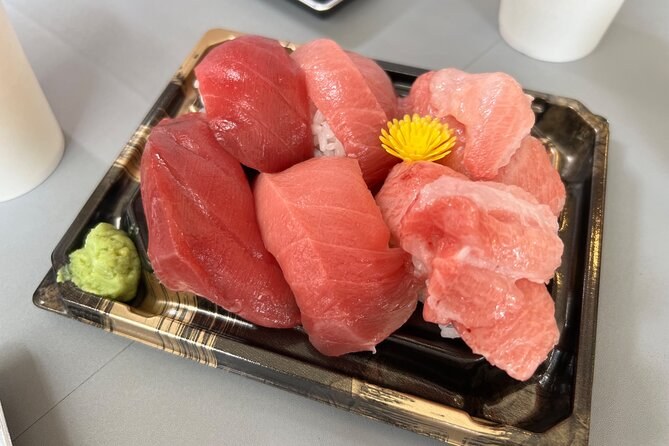
- Something from a tuna counter — akami, chutoro or otoro, cut to order and priced by the hundred grams.
- A seafood rice bowl — 2,000 to 4,000 yen, sitting down, and the natural end to a market morning.
The food post has twelve more with prices.
The rules the market asks you to keep
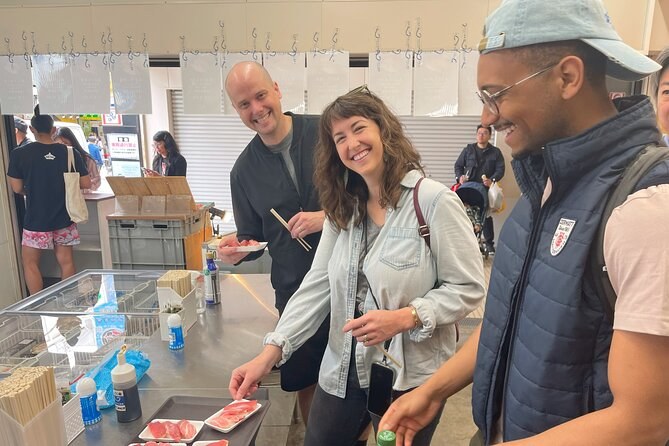
The Tsukiji Outer Market publishes its own conduct guidelines and hardly anything in English repeats them. Three matter most on a first visit: professional buyers have priority until 9am; do not walk while you eat, because the lanes are narrow and the floors are wet; and ask a shopkeeper before photographing their shop.
None of them is onerous, and keeping them is the difference between a welcome and a sharp word.
What about the tuna auction?
It is at Toyosu, about 2.5 kilometres east, and has been since 2018. You can still watch it: a daily lottery gives about a hundred people a close-up deck, and a second-floor walkway above the auction floor is open to anyone with no application at all. One departure here starts there before dawn and finishes in the Tsukiji lanes. The auction page has both routes.
Practical odds and ends
- Cash. 3,000 to 5,000 yen a person. Plenty of counters still do not take cards.
- Luggage. Leave it. Coin lockers at any of the three stations, and Plat Tsukiji stores a stroller for 500 yen.
- Allergies. Ask the operator when you book, never on the day. The allergy page sets out what each one will and will not do.
- Rain. The main lane is roofed and every walk runs anyway.
Ready to pick one? Tsukiji Fish Market Tours compares every walk into the lanes with its price, its group cap and whether the fare feeds you.