The problem at Tsukiji is not finding food. It is that there are several hundred counters, the signage is Japanese, and the longest queue is often the most photographed rather than the best. What follows is twelve things worth eating, roughly in the order a good guide hands them to you.
1. Tamagoyaki, on a stick
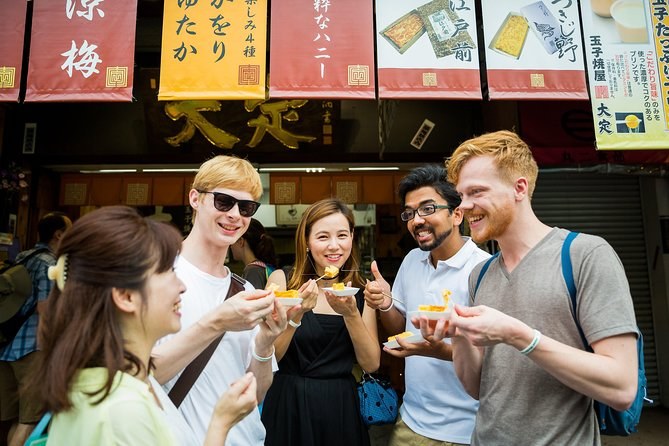
Rolled omelette, made in a rectangular pan, cut into blocks and sold hot for 100 to 200 yen. Sweet rather than savoury, dense, and completely unlike an omelette anywhere else. It is the cheapest thing here worth eating and it is on almost every tour's tasting list.
Eat it at the counter. The market asks you not to walk while you eat, and a warm skewer at elbow height in a lane three people wide is exactly why. Visitor information has that rule and the other seven.
2. A grilled scallop
Opened, set on the grill in its shell, brushed with soy and butter and handed over still bubbling. Five hundred to a thousand yen depending on size. Watching it cook is half the point, and several stalls finish theirs with a blowtorch.
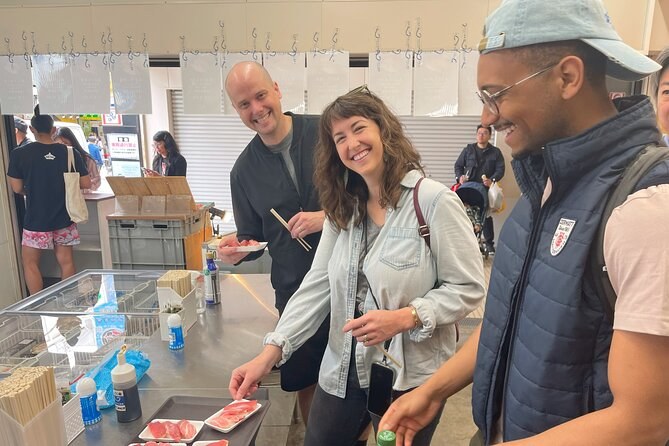
3. Maguro, by the cut
The tuna counters are what most people came for, and the labels reward five minutes of attention.
Reading a Tsukiji tuna counter
| Cut | What it is | Roughly, per 100g |
|---|---|---|
| Akami | The lean red loin. Clean, firm, the least expensive | 600–1,200 yen |
| Chutoro | Medium fatty, from the belly's upper half. The balance most people want | 1,200–2,500 yen |
| Otoro | The fattiest belly cut. Pale, soft, dissolves rather than chews | 2,500–4,000 yen |
| Negitoro | Scraped belly meat with spring onion, usually in a roll or a bowl | 500–900 yen |
| Katsuo | Bonito, not tuna. Smoky when seared, and seasonal in spring and autumn | 500–900 yen |
If you buy one thing to eat standing up, make it a skewer of chutoro. If you buy one thing to take away, ask for it vacuum-packed.
4. Uni, sea urchin
Sold by the wooden box, graded by origin and colour, and priced from about 1,500 yen to well over 8,000. Hokkaido boxes command the premium. Good uni is sweet and briny; poor uni is bitter, which is what most people who say they dislike it have eaten.
5. A Wagyu skewer
Grilled over charcoal, sometimes torched, often served on a slice of bread to catch the fat. The range is enormous — a thousand yen to five thousand — and the price is on the board. One reviewer names the 5,000-yen skewer as worth it; that is a choice, not a default.
6. Oysters
Best from November to March, opened in front of you and eaten with lemon or ponzu. Several stalls will grill them instead. Five hundred to a thousand yen each, and the month-by-month page has what else is in season alongside them.
7. Kaisendon, the seafood rice bowl
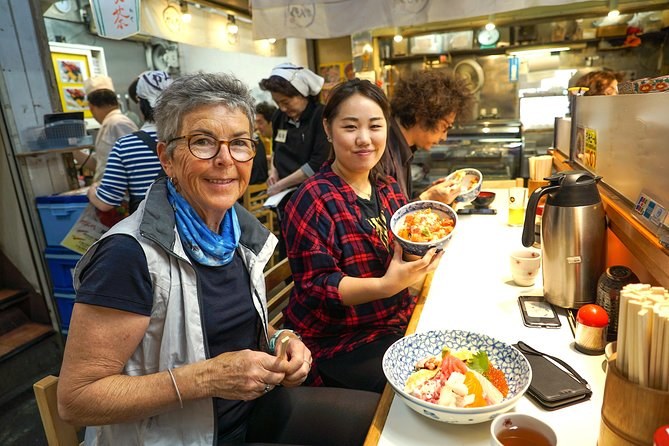
The sit-down dish, and the natural end to a market morning: a bowl of rice under sashimi, usually tuna, salmon roe, scallop and whatever is good that week. Two to four thousand yen. Most of the small restaurants between the stalls do a version, and the queue at eleven is worth avoiding by going at nine.
8. Unagi, glazed eel
Skewered, grilled and lacquered with a sweet soy glaze, sold hot in rows. Eel is traditionally eaten in the hottest part of summer to survive it, which is why July is when you see most of it.
9. Fish cake and satsuma-age
Fried fish paste, sometimes with vegetables through it, sold by the piece for two to five hundred yen. It is the market's everyday snack rather than its luxury, and it is on several tours' tasting lists for exactly that reason.
10. Ikura, salmon roe
Sold by the box in the same cases as the uni, and served in a paper cup at some stalls so you can eat it where you stand. Autumn is the season. It is intensely salty and one of the few things here a child will either love or refuse outright.
11. Strawberries and seasonal fruit
An underrated part of the market. Japanese strawberries in winter and spring, melon and peach in summer, sold at fruit stalls that have nothing to do with fish. Several tours finish on fruit deliberately, because after an hour of seafood it is what you want.
The fruit stalls are also the easiest counters in the market to buy from with no Japanese at all: everything is priced, everything is visible, and nobody expects a conversation.
Where the good counters actually are
There is a rough geography to it and knowing it saves twenty minutes. Raw fish and shellfish cluster nearest the old market site, towards the river. Cooked street food and the sit-down counters fill the middle blocks. Dried goods, tea, pickles, kitchenware and the knife makers sit towards Tsukiji Hongan-ji at the western end.
Nothing signposts any of that. The market page sets out what is in each block, and the map page puts it against the station exits so you can walk in at the end you actually want.
One building is worth going out of your way for: Tsukiji Uogashi, where about sixty of the old wholesale traders still sell. Its third floor has a food court and a roof terrace, and it is the only place in the market with real seating that is not a restaurant. Most visitors walk straight past it.
When to come, if the eating is the point
Nine in the morning. Everything is open, the trade has finished and the queues have not started. By eleven the well-known counters are twenty deep, and by one the stalls are closing around you. The calendar page has the hours and the closed days, which include some Wednesdays.
12. Matcha, and something sweet
Tea shops blend in-house and will sell you a hundred grams of something good for under two thousand yen. There is soft-serve, there is mochi, and there is a decent case for finishing a market morning with both.
What it all costs
The order to eat in
- Tamagoyaki, standing up, in the first ten minutes.
- Something grilled — scallop, oyster or Wagyu.
- A tuna counter, for one good cut rather than three cheap ones.
- Sit down for a bowl before eleven.
- Fruit or tea on the way out.
That is about ninety minutes and about four thousand yen. A Tsukiji Fish Market food tour does the same route with the ordering handled, and the market page covers what else is sold in these blocks.
If you cannot eat fish
You will still eat. Tamagoyaki, fruit, pickles, senbei crackers, mochi, matcha and the Wagyu counters are all here, and the dried goods, tea and knife shops are a large part of the market. Tell an operator when you book rather than on the day — the allergy page collects exactly what each one says.
Want somebody to order it all for you? Tsukiji Fish Market Tours lists the walks that buy your tastings and the ones that leave the choosing to you.