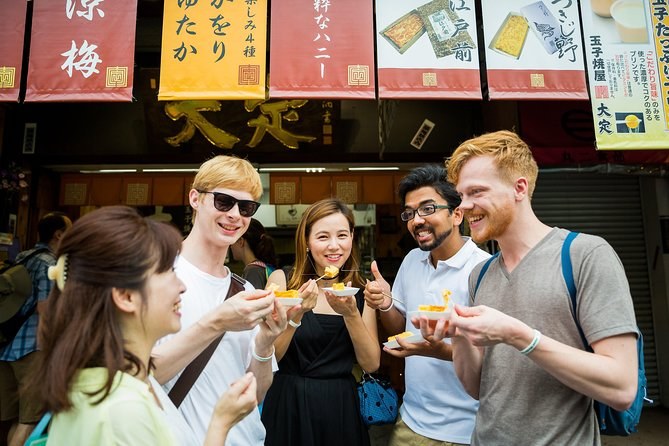
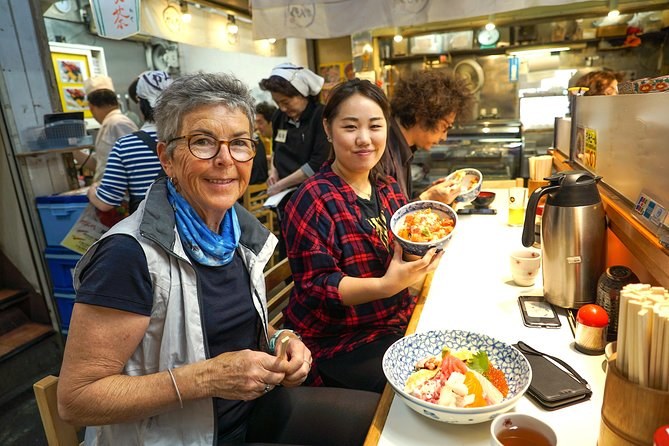
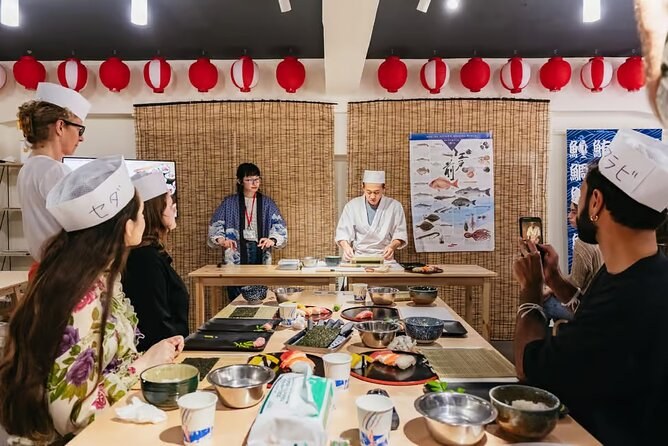
A market is not a museum. What is in the cases changes with the season, the lanes are open to the sky at both ends, and the difference between a January morning and a July one is not a matter of degrees on a chart — it is a different visit.
This guide is the year, month by month, on both axes at once.
What actually changes with the season
Three things, and only one of them is the weather.
What is on the counter. Fatty tuna and crab in winter, firefly squid and clams in spring, eel and sea urchin in summer, saury and salmon roe in autumn. This is the axis that matters if food is the point.
How long you last. Three hours on your feet on wet stone. In November that is nothing; in August it is work.
How many other people are there. Spring and autumn are the busy seasons in Tokyo generally, and the last four days of December are the busiest here specifically.
Winter: December, January, February
The best eating of the year and the coldest standing. Tokyo runs about 10°C by day and 1 to 4°C at night, with the driest weeks of the year in January.
In the cases: kan-buri, the cold-season yellowtail, at its fattiest. Oysters. Snow crab. Cod and monkfish. Fugu, in the season it is eaten. This is when the tuna is best too, which is why New Year buying is the crush it is.
Dress for standing rather than walking. The rows are open at both ends and there is crushed ice on every counter, so it is colder in the lanes than the forecast says.
Spring: March, April, May
The most comfortable months and the busiest. April averages 19°C by day and it is the best walking weather of the year, which everybody else has also worked out.
In the cases: hamaguri clams, sakura shrimp, firefly squid in March, and the first bonito of the year in April — hatsu-gatsuo, which Tokyo has made a fuss about for three hundred years. Sea urchin starts appearing in quantity by May.
Golden Week, at the start of May, brings a domestic crowd. Book two to four days ahead through the whole season.
Summer: June, July, August
The rainy season, tsuyu, runs through most of June: steady rather than heavy, and the main lane is roofed, so it is inconvenient rather than ruinous. The floors get slick.
July and August are the hard months. August averages 31°C by day with humidity to match, and one operator warns its own guests about 40°C days in its listing. Come at nine and be finished by eleven.
In the cases: eel, eaten in the hottest part of summer precisely to survive it. Abalone. Sea urchin at its peak. It is genuinely good eating — you simply have to do it early.
Autumn: September, October, November
September is the wettest month of the year at 225mm and the peak of typhoon season. A typhoon rarely closes the market and reliably empties it, and transport across Tokyo can stop for a few hours.
October is wetter still on paper, mostly in a few days, and between the storms it is the second-best month of the year to walk here. November is the quiet reward: 17°C by day, the rain drops away, and the crowds have gone.
In the cases: sanma, the Pacific saury, though catches have been poor for several years running. Mackerel. Salmon roe. The returning bonito, modori-gatsuo, fatter than the spring fish. Oysters come back in November and yellowtail starts to fatten.
Which month should you actually pick?
Tsukiji month by month. Temperatures are JMA 1991-2020 normals for Tokyo
| Month | Day / night | Rain | In the cases | Verdict |
|---|---|---|---|---|
| January | 9.8 / 1.2°C | 60mm | Yellowtail, oysters, crab, cod | Best eating, coldest standing |
| February | 10.9 / 2.1°C | 57mm | Fugu, cod, oysters | Coldest, and the quietest |
| March | 14.2 / 5.0°C | 116mm | Clams, firefly squid, sakura shrimp | Comfortable again |
| April | 19.4 / 9.8°C | 134mm | First bonito of the year | The best weather, and busy |
| May | 23.6 / 14.6°C | 140mm | Sea urchin arriving | Warm and straightforward |
| June | 26.1 / 18.5°C | 168mm | Eel, early abalone | Rainy season. Fewer people |
| July | 29.9 / 22.4°C | 156mm | Eel at its peak | Nine o'clock or nothing |
| August | 31.3 / 23.5°C | 155mm | Abalone, sea urchin | The hardest month |
| September | 27.5 / 20.3°C | 225mm | Saury, returning bonito | Typhoon season |
| October | 22.0 / 14.8°C | 235mm | Mackerel, salmon roe | Excellent between storms |
| November | 16.7 / 8.8°C | 96mm | Oysters, yellowtail fattening | The month to pick |
| December | 12.0 / 3.8°C | 58mm | Tuna, crab, the New Year buying | Cold, dry, and mad at the end |
What happens in the last week of December?
Between about the 28th and the 31st, Tokyo buys the fish for New Year and the lanes go shoulder to shoulder. Prices for the prestige cuts rise with the crowd. It is genuinely worth seeing once, and it is the wrong week for a first visit.
Then it shuts, for the best part of a week into early January. If your trip crosses New Year, that closure is the single most important date to check.
Which days is the market closed?
Sundays, public holidays and the Wednesdays the wholesale market's own calendar closes. The Wednesdays are the trap: they are not a weekly rule, they follow the wholesale market's own trading calendar, and two consecutive Wednesdays can differ.
Does the season change which tour to book?
A little. In July and August take the shortest walk you can find and start it at nine — ninety minutes is plenty when you are standing in 31°C. In December and January take the longest one you can, because the eating is at its best and you will find the cold easier to manage while you are moving.
Through the rainy season, the walks that spend more time under the covered lane and inside Tsukiji Uogashi are the better bet, and every walk here runs in the rain regardless.
Does the crowd change with the season?
Noticeably. Spring and autumn are Tokyo's high seasons generally and the market follows: April, May, October and November are the months when a Saturday at eleven is genuinely uncomfortable. February and June are the quietest, for opposite reasons — one is cold and one is wet, and neither of those closes anything.
The exception swamps the rule. The last four days of December are the busiest of the year by a distance, when the whole city buys its New Year fish in the same week. If you want to see that, go; if you want to shop and eat comfortably, do not.
Whatever month you pick, nine in the morning halves the crowd against eleven. That is a bigger lever than the season is.
What should you wear, month by month?
You are standing rather than walking, mostly outdoors, on wet stone, with your hands full. That changes what works.
December to February: a coat you can eat in, and gloves you can take off quickly. The rows are open at both ends and there is crushed ice on every counter, so you will feel colder than the forecast suggests.
March to May: layers. Mornings start around 5°C in March and reach the low twenties by late May, and you will be out for three hours of that.
June to August: as little as you decently can, plus something for the rain in June. Carry water — the market sells it everywhere — and accept that you are finishing by eleven.
September to November: a light waterproof through the typhoon weeks, and by November a jacket. Shoes with grip in every month of the year, because the floors are wet whatever the sky is doing.
Is there a bad month?
Not really, which is unusual. August is hard work and September carries typhoon risk, and neither closes the market or empties the cases. The genuinely bad choice is a specific day rather than a month: a Sunday, a public holiday, a closed Wednesday, or the first week of January.
Frequently asked questions
What is the best month to visit the Tsukiji Fish Market?
Is Tsukiji worth visiting in summer?
Does the market close for New Year?
What is in season at Tsukiji right now?
Does rain stop a Tsukiji tour?
When is Tsukiji least crowded?
Tsukiji Fish Market Tours lists walks on every trading morning of the year. A Tokyo Tsukiji Fish Market tour runs whatever the forecast does, and the month-by-month page has the numbers behind this guide.